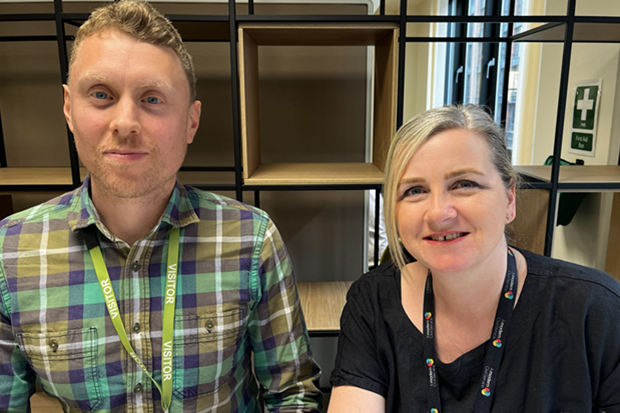
Service Assessment Manager Mary McMahon and Sustainable Design Lead Ned Gartside explain how, from this month, Defra service assessments will include a new requirement with sustainability at its core.
Digital services are a core part of how we deliver outcomes for citizens, businesses and the environment. As our services grow, so does the responsibility to understand—and reduce—the negative environmental and social impacts connected to the technology we build and run.
That’s why, from this month, all projects going through the Defra service assessment process will need to meet an additional requirement alongside the existing 14 points in the Government Digital Service (GDS) service standard.
We’ll be asking service teams to show how their service will be designed, developed and operated to be as sustainable as possible, and capture their approach in a sustainability statement.
Less abstract, more practical
Our approach is also intended to make something that can feel abstract much more practical. The sustainability statement gives teams a structured, consistent way to show how they are meeting existing sustainability expectations in the Technology Code of Practice and the Service Manual without having to start from a blank page.
And we won’t be leaving service teams to figure out which sustainability actions are most relevant and meaningful for their project, by themselves. When projects are at the end of the Discovery phase, they are asked to complete a Risk Assessment, which helps them identify the main sustainability risks connected to the service and point to the proportionate actions they can take to address these.
In this way, we have worked to design a consistent and joined up process for sustainability that supports teams right through from the early stages of the lifecycle through to being assessed at Service Assessments.
Depending on what they are building and the context of the service, sustainability risks could include:
- carbon emissions and net zero, for example, hosting choices, data transfer, storage, and end-user device impact;
- water use and understanding the footprint in relevant parts of a technology supply chain;
- circularity such as extending the life of hardware, reducing e-waste, and designing for reuse and efficient change;
- resilience to climate risk and thinking through how climate related disruption could affect a service, suppliers, or operational model;
- social risks and value, for example, modern slavery considerations in supply chains, and opportunities to create wider social value (such as employment or education outcomes linked to the service).
What should go in the sustainability statement?
The GDS Service Standard comprises 14 points designed to help teams create and run high quality, user-focused public digital services. It ensures services are consistent, accessible, secure, and built using agile methods. Adherence to these standards is verified through mandatory assessment stages – alpha, beta, and live.
With our new standard, there isn’t a one-size-fits-all template, but assessors will be looking for a clear, service-specific narrative that shows the delivery team has considered sustainability risks and taken action
A strong statement typically covers:
- what sustainability issues are most material for your service;
- what you’re doing now (design, build and operate) and what you are planning to do at subsequent lifecycle stages;
- what you’ll measure or monitor for sustainability;
- what trade-offs you’ve made and why, including constraints faced by a project that might limit action on sustainability.
Why this matters
By implementing this change, we believe we will deliver more than traditional sustainability outcomes. This is because there are often co-benefits between sustainability and other priorities, such as cost, performance, usability and accessibility, and applying a ‘sustainability lens’ serves to highlight and bring focus on these win-wins. This approach supports more resilient and efficient digital services, and creates opportunities to contribute to wider government goals, such as circularity and growth, by building services that are better designed, better operated, and better aligned to policy intent.
This milestone also supports the Defra group digital sustainability strategy and reflects the continued leadership Defra group is showing, leading as it does on strategy and co-ordination for this topic for UK government as a whole.
Our work to date has been shaped by collaboration across the Defra group of organisations, including our own Digital Technology Standards and Assurance team, designers, architects, software developers and delivery and project management professions, Commercial colleagues, and a wide range of collaborators from across the wider UK public sector, and the suppliers, tech companies, universities and third sector organisations in the Government Digital Sustainability Alliance.
How we are supporting colleagues to make this change
We understand that some colleagues may be unsure how to get started in including this new standard in the design and development of digital services.
So, we’ve created some resources, guidance and supporting materials for exactly this reason. The Defra Digital Service Manual contains guidance on the approaching the sustainable design and development of services, including the 15th Standard point itself and on the process that service should follow.
The Greener Service Principles also act as a library of the actions that services can take on sustainability, with a first version available on GitHub. A much iterated and evolved Version 2.0 will soon be available on a Defra webpage, and for now a spreadsheet of this version is available for teams in the Department.
It should be noted that assessment against a 15th Service Standard point focused on sustainability only applies currently to projects going through Defra service assessments and not to those going through full GDS service assessments. However, we are working closely with GDS and the work that Defra is leading on will inform updates to the GDS Service Manual and Service Standard in due course, as well rollout of this through all government departments.
Our key message to colleagues as they plan their next delivery phase - make sustainability part of their definition of “done”. And if they already have a service assessment coming up, that now is the right time to draft their sustainability statement, test it with colleagues, and bring it to assessment as confident, decision-ready evidence — not an afterthought.
More information
Mary McMahon is a Service Assessment Manager in Defra Digital Data Technology and Security, and Ned Gartside is a Sustainable Design Lead.
You can contact Ned and Mary if you would like to share your own experiences of working in this space, or if you have a question for them.
If you're interested in finding out more about what we do in Defra Digital Data Technology and Security Check out our LinkedIn page for all the latest news, stories and job openings. While you're there, why not give us a follow?
Like what you read? Subscribe to the blog for all the latest updates.
1 comment
Comment by Paul Bailey posted on
Brilliant to see this work taking shape Ned and Mary!